
01Step 1 of 4
We scope the MVP together
We figure out the smallest version worth building - and price it clearly.

We build the product end to end, from the first screen through billing and onboarding, then hand over the code, the infrastructure and every account when it's done.
We build SaaS products end to end: authentication, roles, subscriptions, dashboards, and the infrastructure underneath. The goal is the smallest product someone will pay for, built so the next twelve months of features don't require starting again.
Deliverables
Tools & approach
The work
We figure out the smallest version worth building - and price it clearly.
UX flows and a technical plan before anyone writes a line of code.
You see real progress every two weeks on a live staging app.
We ship it, hand everything over cleanly, and help you decide what to build next.
Detail
Enough to charge for, and no more. In practice that's authentication, one core workflow done properly, billing, and the admin view you need to support customers.
Everything else - teams, integrations, granular permissions, analytics - is easier to add once real users have told you which of them they actually want. Most roadmaps written before launch are rewritten after it.
Stripe for most products: subscriptions, trials, proration, invoices, failed-payment recovery and the webhook handling that keeps your database honest when payments change state.
Billing is where teams underestimate the work. The happy path takes a day; the edge cases - a card failing mid-cycle, a plan changing halfway through a month - are the part that takes real care.
Products rarely break under traffic. They break under revision - the fourth feature the data model never anticipated, the integration wired straight into the interface.
So the effort goes into boundaries: a data model that tolerates new features, service edges that can be split later, and a multi-tenancy decision made deliberately on day one rather than discovered on day three hundred.
Yes, and it is work we have already shipped. PropDesk is a white-label property platform where each real estate agency gets its own branded site, a private admin portal and a subscription plan. Every agency's data is isolated, so one agency can never see another's leads.
The centre of a real estate CRM is the lead pipeline. PropDesk tracks each enquiry through nine stages and records where it came from, whether that was a web form, WhatsApp, a call or a chatbot. That source tracking is what tells an agency which channel is worth paying for.
If you run or serve real estate businesses in Ahmedabad, Gujarat or elsewhere in India, we can build a CRM shaped around how your team actually works, rather than asking your team to adapt to a generic tool.
Two-week sprints against a live staging environment you can use yourself. You see real progress each fortnight rather than a status document.
At handover you get the code, the infrastructure as code, the deployment pipeline, the runbook and every account. Bringing it in-house later should be a decision, not a negotiation.
Proof
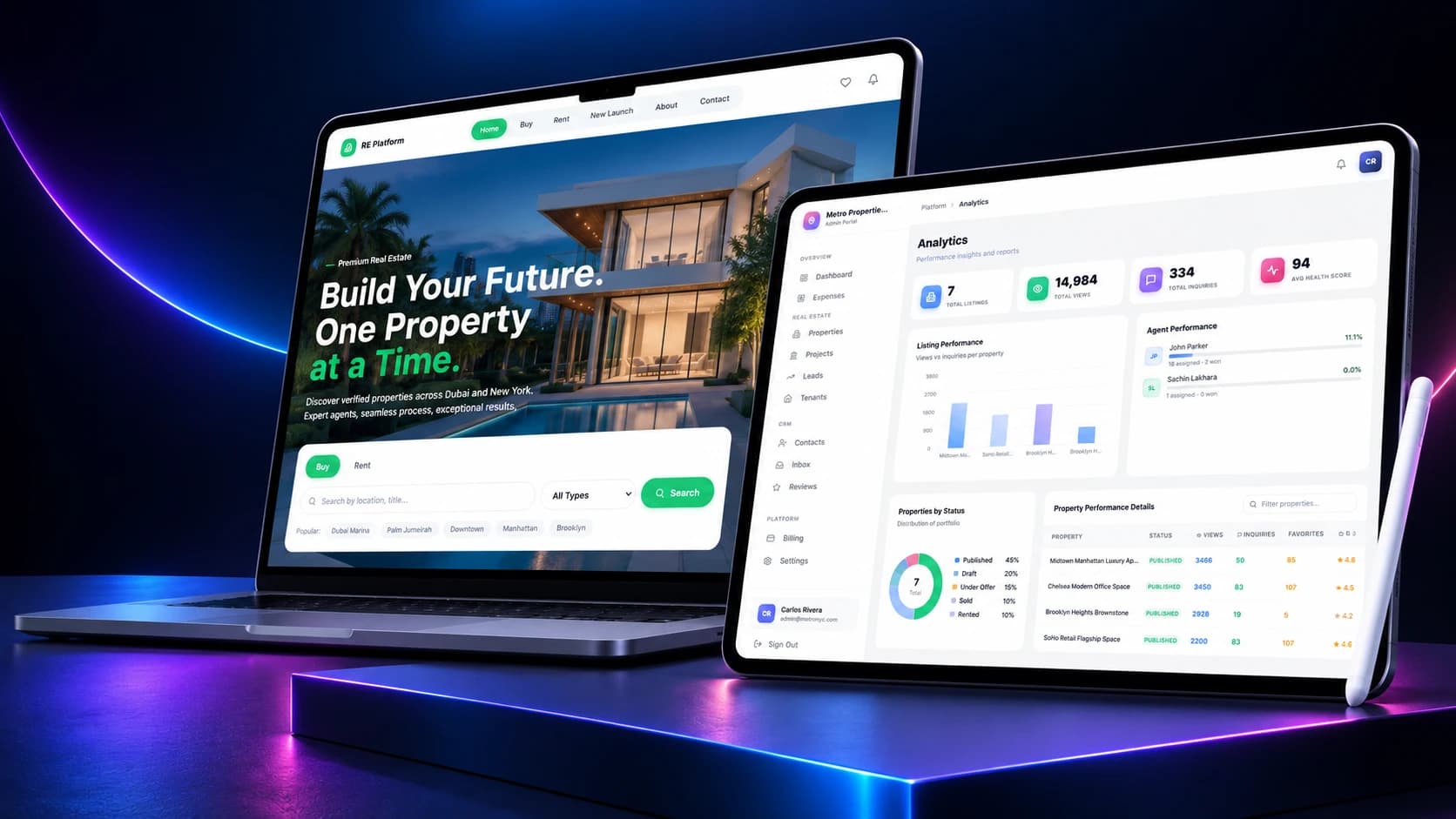
Real estate agencies each get a branded public site, a private admin portal and a subscription plan whose limits are enforced at the API - not in the interface.

The backend behind a prize-draw product: a user reserves ticket numbers, pays, and either receives issued tickets or has the reservation released - with nothing left half-committed in between.

An admin platform for a coaching institute - board to topic in seven levels, a question bank with bulk import, exams and a paper generator. A self-directed project, not client work.
Questions
That's exactly what we recommend. We scope the smallest version that someone would actually pay for, get it in front of real users, and build from there.
Start with saas product development.
Get a quoteAlso known as
Tell us what you're working on and what's slowing you down. A short call is usually enough to know whether we're the right fit - no proposal required first.
Quick links